

This week, the Insight into Health series at Vintage House Sonoma featured my very first book club. And the best part? I did the reading for you!
You will usually find me reading at least two books at a time: one fiction (often historical) and one nonfiction. While fiction is purely for pleasure, my nonfiction books tend to be filled with sticky notes, which I later summarize in a notebook so I don’t forget my favorite takeaways.
This was the inspiration for the Insight into Health book club — to allow me to put those notes to use. January’s book is Outlive by Peter Attia, MD.
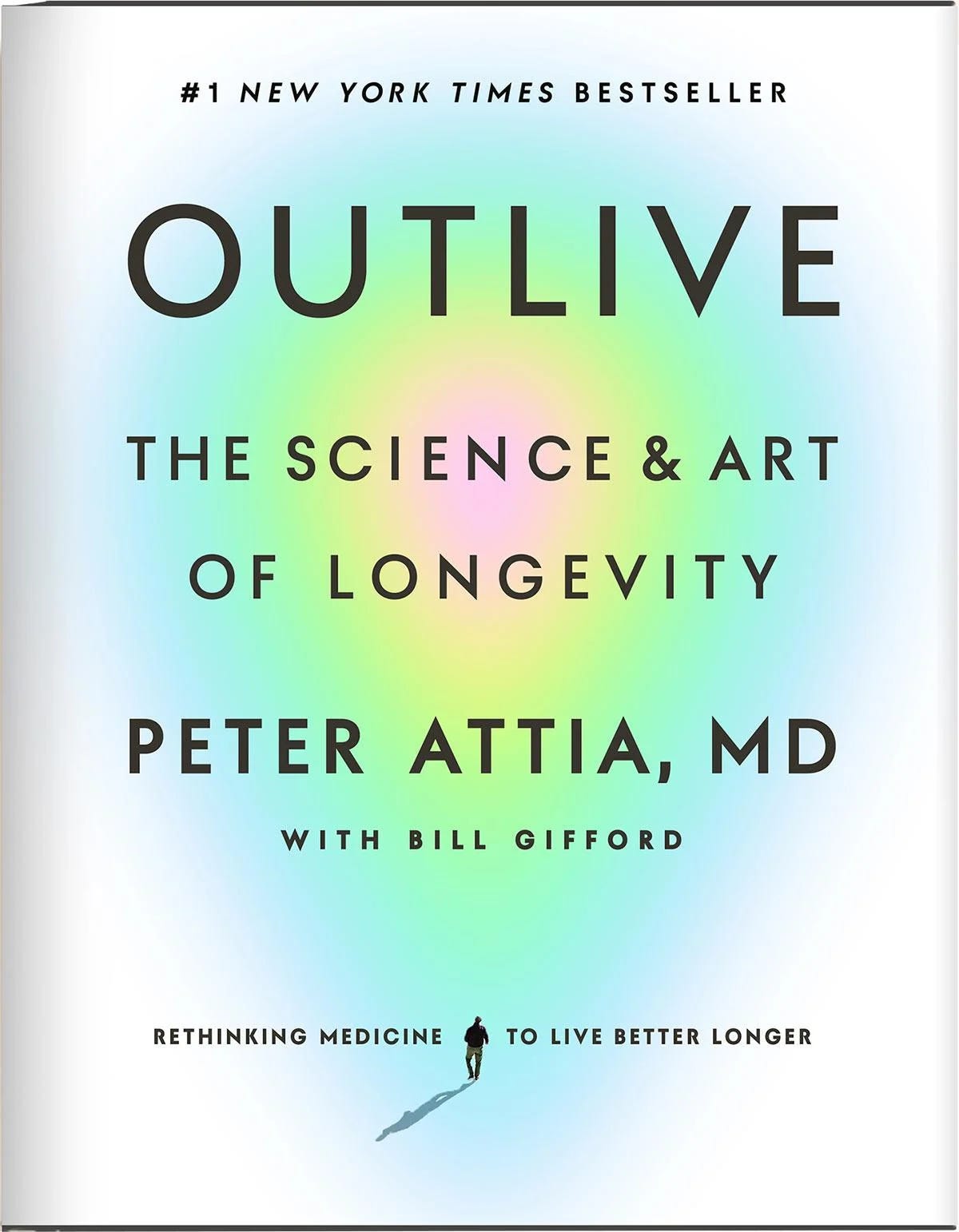
Peter Attia, MD, is a Stanford-trained physician who transitioned into preventive medicine after seeing how traditional healthcare often treats disease too late. He now focuses on translating medical research into strategies to reduce the risk of chronic disease and extend healthspan.
I have been listening to Peter Attia’s deep-dive podcast, The Drive, for years1. While I love the detail and complexity he and his guests get into, I was thrilled when I learned that he was publishing a book. A book that I hoped would be more accessible to everyone than his highly technical podcast.
I’m glad to report that Outlive lived up to my expectations.
If you have read any of my posts about defining health2 or listened to my weekly radio program, you will quickly understand how much Peter Attia’s work influences my approach.
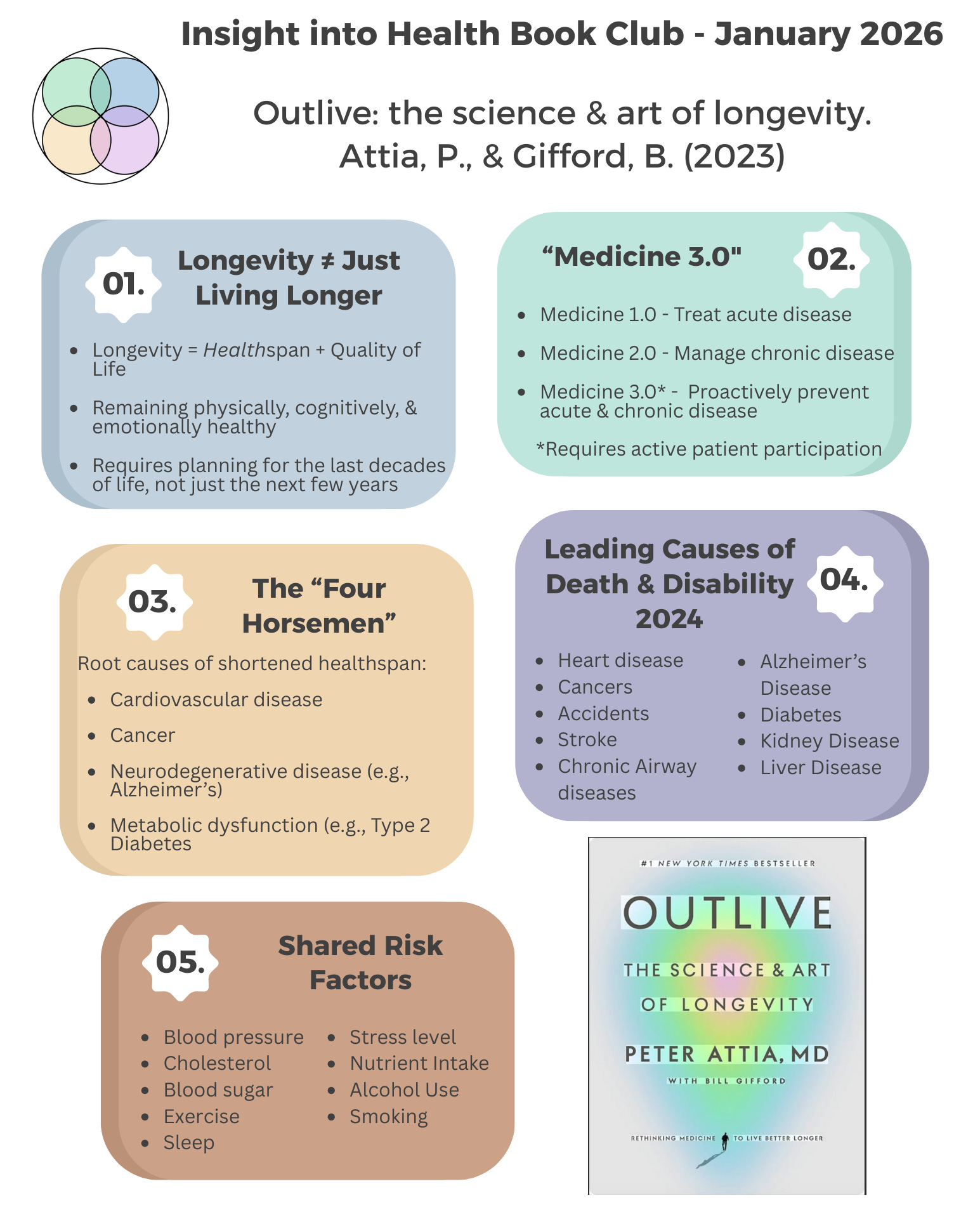
Below are my takeaways from the book, which can be further summed up as this:
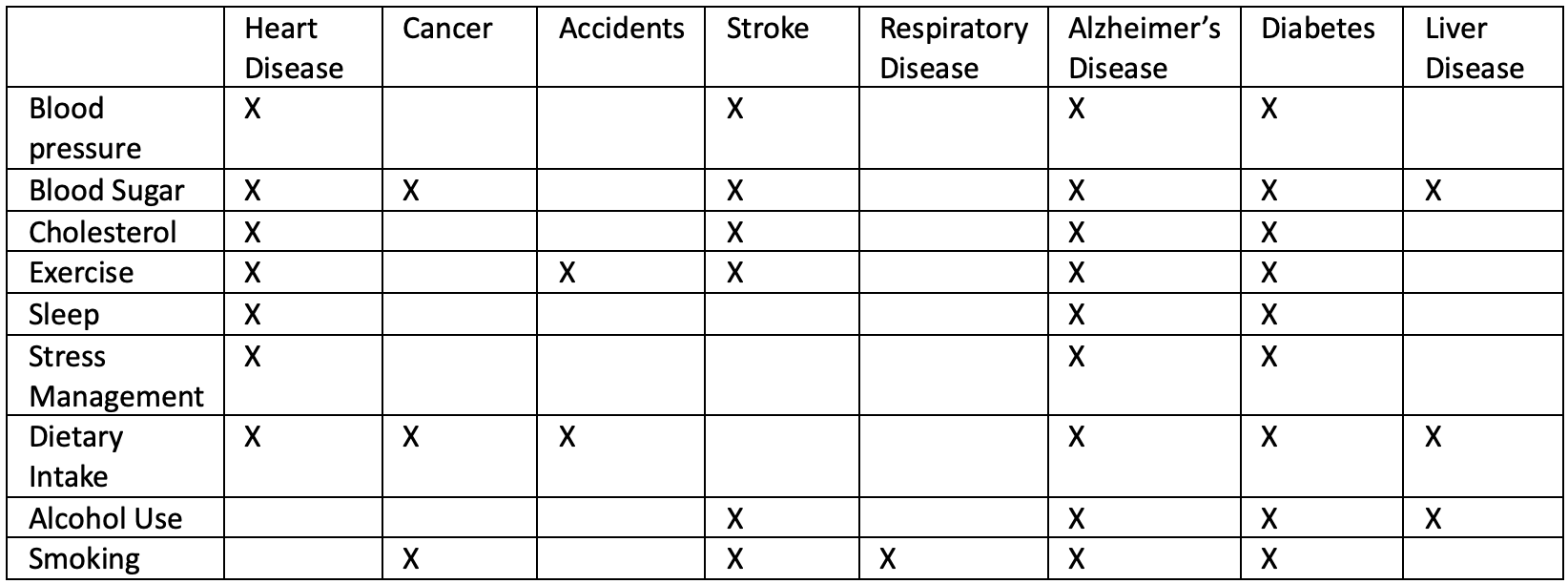
Many of the leading causes of chronic disease, disability, and death share common risk factors. We can often reduce those factors by advocating for more intensive preventive monitoring, proactive intervention, and active participation in our own health.
To further illustrate this point, when the leading causes of death in the U.S. are compared by their shared risk factors, the overlap is striking:
If I have your attention now, you may be wondering, “Where do I start?”
Peter Attia recommends beginning with an honest evaluation of your current health, including comprehensive lab testing and preventive screenings to help you and your provider identify and address risk factors.
An important distinction between the labs included in a standard annual physical and Peter Attia’s recommendations is the expanded testing and the way results are interpreted, as illustrated in Section 1 below.
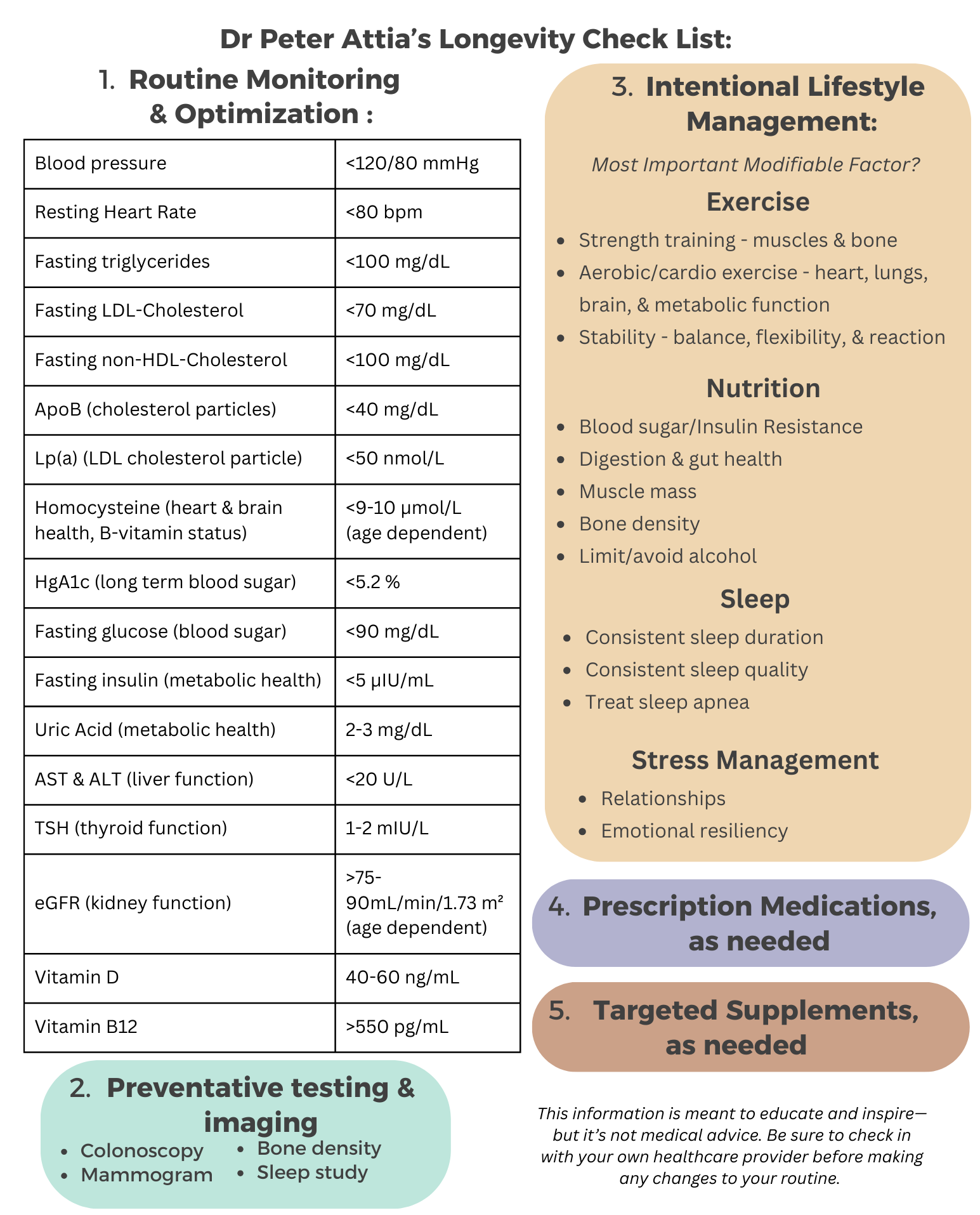
First, here’s a brief explanation of each test and why it’s recommended:
Blood pressure (BP): Chronic elevation overstresses arteries and the heart.
Resting heart rate (RHR): Lower usually reflects improved heart function.
Low-Density Lipoprotein Cholesterol (LDL-C): The main type of cholesterol that can build up on artery walls.
Non-High-Density Lipoprotein Cholesterol (non-HDL-C): All types of cholesterol that can build up on artery walls (includes LDL-C).
Apolipoprotein B (ApoB): The specific number of artery-clogging particles, which can better predict heart disease risk than LDL-C alone.
Lipoprotein(a) (Lp(a)): A genetically inherited cholesterol particle that increases heart disease risk.
Fasting glucose: A marker of short-term blood sugar regulation.
Fasting insulin: Indicates how hard the body has to work to manage blood sugar; higher levels suggest insulin resistance, even before fasting glucose increases.
Hemoglobin A1c (HbA1c or “A1c”): Average blood sugar over months; indicates long-term blood sugar levels.
Uric Acid: A marker of metabolic stress and cardiovascular risk.
Aspartate Aminotransferase (AST): A marker of liver health, elevations suggest fat accumulation or liver damage.
Alanine Aminotransferase (ALT): A marker of liver health, elevations suggest fat accumulation or liver damage.
Thyroid-Stimulating Hormone (TSH): Reflects thyroid function, which affects metabolism and energy.
Estimated Glomerular Filtration Rate (eGFR): An indicator of kidney function.
Vitamin D: Supports bone, immune, and cardiovascular health.
Vitamin B12: Essential for energy metabolism, nerve, and blood health.
Homocysteine (Hcy): Elevated levels signal B-vitamin insufficiency and cardiovascular risk.
It’s a mystery to me why all of these tests aren’t standard, especially the ones that can provide earlier indicators of chronic disease risk (like fasting insulin) — all the more reason to be your own advocate for true disease prevention.
Now, let’s see how to make sense of these results.
As you would expect, Peter Attia doesn’t settle for results that are merely “fine,” or “within normal limits” (WNL) in medical jargon.
He wants your results to be as optimal as possible, which means you can’t always rely on what your lab report — or your doctor — says about your results.
While his guidelines for markers such as blood pressure and LDL-C align with standard recommendations, many of his targets are more ambitious, reflecting a goal of minimizing disease risk as much as possible.3
One example is hemoglobin A1c, a test often used to identify prediabetes (above 5.7%) and diabetes (above 6.5%).
What if your A1c comes back at 5.6%? You may be told that everything is normal. But that is like standing on the edge of a cliff and saying you're fine because you haven’t fallen. Yet.
Whew, I know this is a lot to take in. We didn’t even get this far in the book club group. Luckily, we can continue next week while I try my hand at my first cooking demos.
There’s just one more thing I want to share before we wrap up. The order of the longevity checklist is very intentional. It starts with testing and assessment (and later, reassessment) to guide your next steps, whether that means lifestyle changes, medications, or supplements.
This way, if and when you and your doctor decide to add a medication, you can do so with confidence, knowing you remain an active participant in your own health.
When it comes to supplements, I have so much to say that it deserves a post all its own. The short version: I’m not “pro” or “anti” supplements. I’m all about targeted supplementation — first figuring out if you truly need a supplement, and if you do, regularly monitoring the dose and duration.
Thanks for being here,
~Allison
This is a good summary podcast to listen to if you are interested in where to start: https://peterattiamd.com/longevity101/

Please, please, please remember that this information is meant to educate and inspire, and is not considered medical or health advice. There are certainly situations where goals for several of these markers are different from those indicated above, making it essential to discuss your health and lab tests with your healthcare provider.