

Hey! You! Yes, you! Check out the Insight into Health podcast hosted by… me!
You can find it wherever you listen to podcasts, including Apple & Spotify.
This is the 3rd and final piece in my series all about sleep. In Part 1, I shared my thoughts on the importance of good sleep (and what “good” even means). Part 2 explored the hormones that manage, and are managed by, sleep.
Today is all about how to leverage the systems within each one of us that are made to help us sleep.
Foundations of Good Sleep
Morning sunlight — Even a few minutes of direct morning sunlight increases alertness by decreasing melatonin production and increasing alertness hormones. Set yourself up for an energized day and better sleep tonight.
Take your morning cup of coffee or tea on your porch, get out on a short walk with your furry friend, or simply step outside to hear the goings on.1
Simulate sunset — Sleep doesn’t happen like a light switch. Give your system a head start by reducing light in your environment 1-2 hours before bed so that melatonin production has time to ramp up in time for bedtime.
Turn off bright overhead lights, use dimmer switches or lower wattage light bulbs, and create a bedtime routine that doesn’t rely on screens.
Increase sleep pressure — As introduced in Part 2, accumulation of adenosine in the brain is an important driver for sleep. Regular exercise helps promote that sleep pressure, establishes your circadian rhythm, and may decrease the stress and anxiety that often makes sleep difficult.
Try your favorite cardio and/or resistance activities earlier in the day for better sleep later that night. Relaxing practices such as restorative yoga and tai chi before bed may also be helpful.
Consistency is key — There doesn’t appear to be one “right” time to go to bed. Instead, it may be dictated by your chronotype. Consistency may be more important than sleep timing because it supports your internal sleep system. Going to bed at vastly different times each day is akin to being chronically jetlagged.
Go to bed and wake up at the same time every day to mimic regularity in sunrise & sunset. If shifts to your sleep schedule are needed, do so in ~15-minute increments (for context: sunrise and sunset change by 1-3 minutes per day!).
Sleep & Your Senses
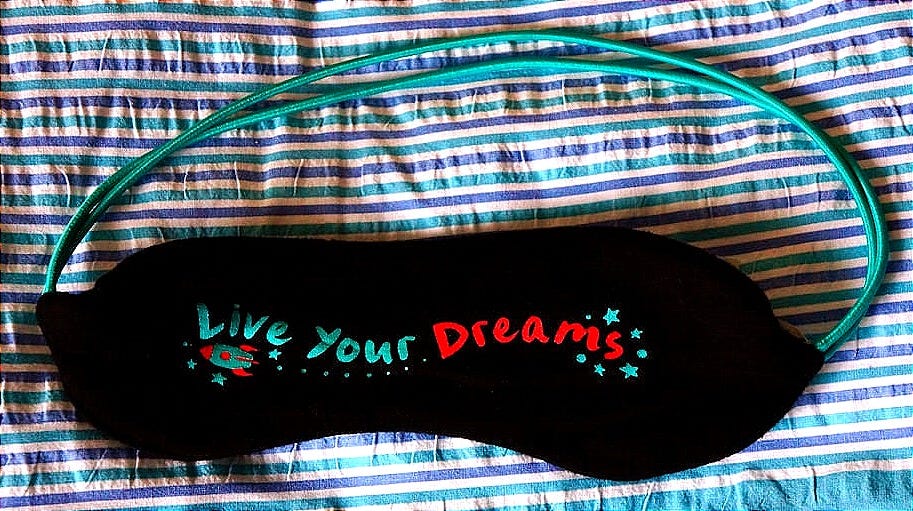
Sight — In addition to leveraging the power of naturally produced melatonin by being exposed to sunlight early in the day, throughout the day, and by mimicking sunset ahead of bedtime, sleeping in complete darkness can help you stay asleep. Consider blackout curtains, eye masks, and other tricks to decrease even small sources of light in your sleeping environment.
Sound — Sudden changes in noise from outside or inside your bedroom during sleep trigger your alertness reflex, making it difficult to fall back asleep. Decrease noise disruptions with white noise machines/apps or earplugs.
Touch — Body temperature affects sleep, & natural decreases in body temperature at night promote good sleep. Amplify this effect by warming yourself up before bed (e.g., a bath, shower, or tea) to support sleepiness as you cool down. Sleep with the room temperature at least a few degrees cooler than it is during the day, if possible.
Taste — Avoid caffeine (coffee, tea, soda) for 8 hours before bed to support sleep pressure. Finish eating 2-3 hours before getting into bed to improve digestion & decrease heartburn. Limit fluids for 2 hours before bed to prevent bathroom wakeups. While alcohol may appear to make it easier to fall asleep, alcohol actually disrupts deep sleep.
Other Factors to Consider
If you’re concerned about your sleep, energy levels, or health, please consult your doctor. Several medical conditions can be both symptoms and causes of poor sleep, including sleep apnea, restless leg, chronic pain, anxiety & related disorders, heartburn/reflux and other GI conditions, and any medical and/or medical cause of excessive nighttime urination.
Additionally, there are several other factors that I wasn’t able to cover in detail in this series, but I’ve linked to more information for the following sleep-related topics:
I hope this series has provided some helpful insights and, hopefully, some better nights of sleep for you! Thanks for being here,
~Allison
Interested in more of the Insight into Health podcast? New episodes are published every Wednesday. Follow on Substack, Apple, Spotify, or wherever you listen to podcasts.
Remember that this information is meant to educate and inspire, but is not medical advice. Please consult your healthcare team to determine what is most appropriate for you.