

This is the second in a series of posts for National Nutrition Month. If you missed it, check out Part 1: What is Nutrition?
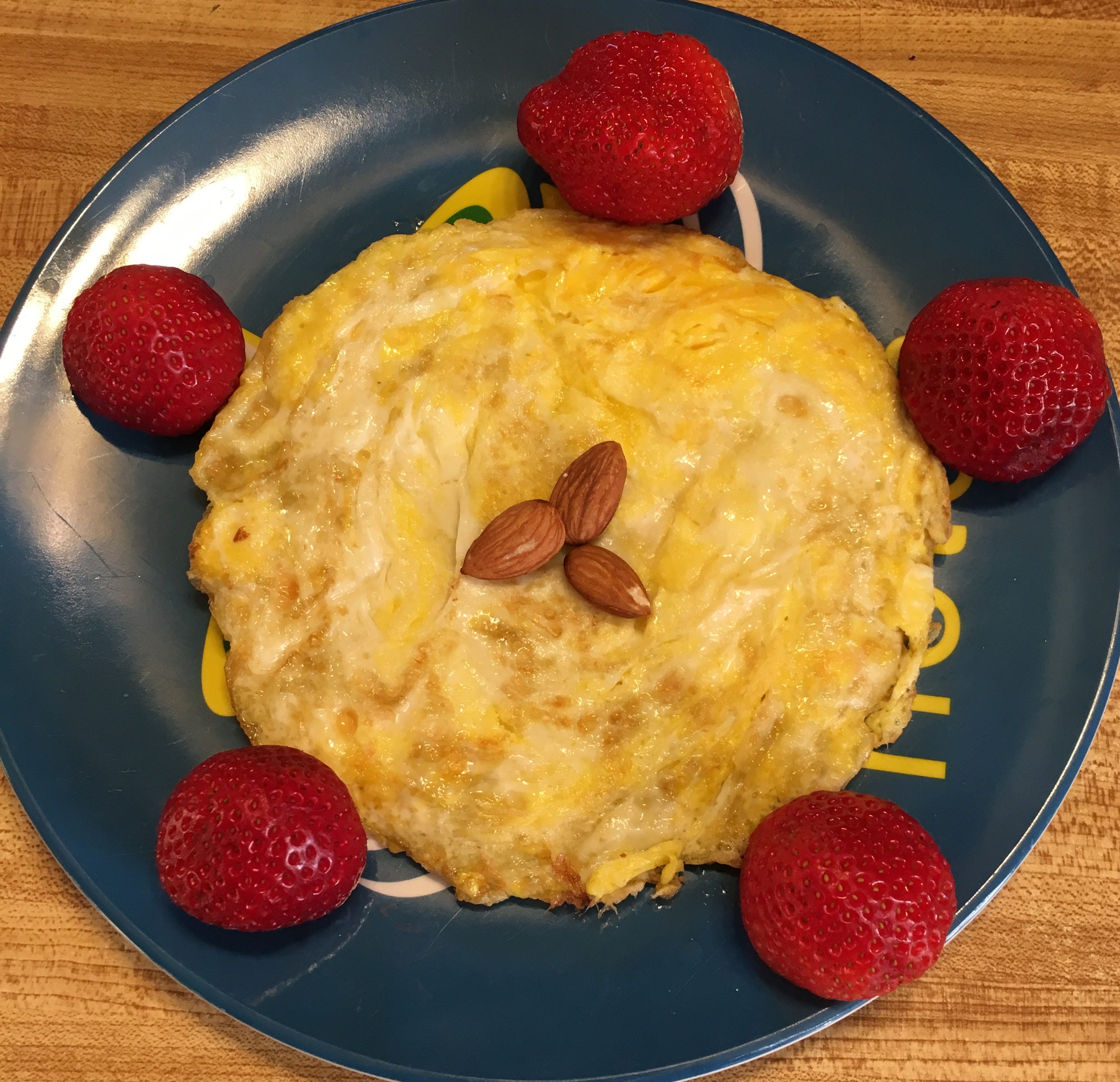
Today, we are diving into the world of macronutrients (or “macros” as the world knows them now): Protein, Carbohydrates, and Fat.
Nutrition Trends
Each macro has had its time in the spotlight:
The 1980’s and 90’s were the low-fat days
The 2000’s brought around the stubborn low-carb craze
We are currently in the midst of high-protein everything
The tricky thing about these fads is that each is based on what I call “a nugget of truth.” A nugget that, unfortunately, gets blown out of proportion, overgeneralized, and loses its nuance.
So what are the nuggets of truth for each of these macro fads?
Low-Fat:
Eating too much of some kinds of fat may increase your risk of heart disease, obesity, and other chronic diseases.
This doesn’t apply to all fats. Sure, not overdoing it on the butter, bacon, cheese, etc. is generally a good approach. Unfortunately, the low-fat trend also pulled down unsaturated fats like those found in fatty fish, nuts, seeds, avocados, and olive oil, etc., which may decrease risk of heart disease, some cancers, Alzheimer’s disease, and more.
Low-Carb:
Frequently consuming food and drinks high in added sugars & highly processed flours (which replaced much of the fat in the low-fat days) is linked to increased weight, blood sugar, and other metabolic-associated diseases.
This doesn’t apply to all carbs (sound familiar?). High-quality, minimally processed carbs such as fruits, beans, and sweet potatoes have no business being associated with sodas, chips, or cookies.
High-Protein:
I’ve been convinced that the RDA (Recommended Daily Allowance) for protein greatly underestimates how much protein most of us need, especially in midlife and beyond. Adequate protein can help maintain muscle mass (which decreases with age), promote satiety (feeling satisfied between meals), and manage blood sugar.
But, this doesn’t mean that eating high-protein chips, ice cream, and popcorn (yes, these are all real products) is the answer to our health goals.
Meal Planning Principles
I don’t make meal plans for people, despite being asked for them all the time.
I’ve learned that even if I create what I think is the most amazing, delicious, and healthy meal plan, it is too subjective of a task for me to get it right for someone else (“oh, I don’t like avocado,” “I don’t know how to cook that,” “ugh, I can’t stand cottage cheese!”).
Instead, I’ve found that by teaching the principles I use to make a meal plan, not the meal plan itself, people are empowered and can make healthy eating their own.
Some overarching principles to keep in mind:
Meal planning needs to be realistic, sustainable, and enjoyable. If you love to spend 3 hours on a Sunday cooking meals for the week, great, go for it. If Sunday rolls around and meal prep is hovering over you like a black cloud of obligation, that’s probably not the right approach for you.
Use mostly “whole” foods and keep it simple. You don’t need to have gone to culinary school (I didn’t) or spend hours in the kitchen to eat healthy-ish, delicious meals. Simple is the key to making healthy eating realistic & sustainable. We’ve got lives to live, after all.
Put your food to work! By understanding how different macronutrients work in your body, you can manipulate how those macronutrients work to better meet your goals:
Protein: Makes the meal more satisfying, promotes balanced blood sugar, and provides the building blocks for muscle growth & maintenance.
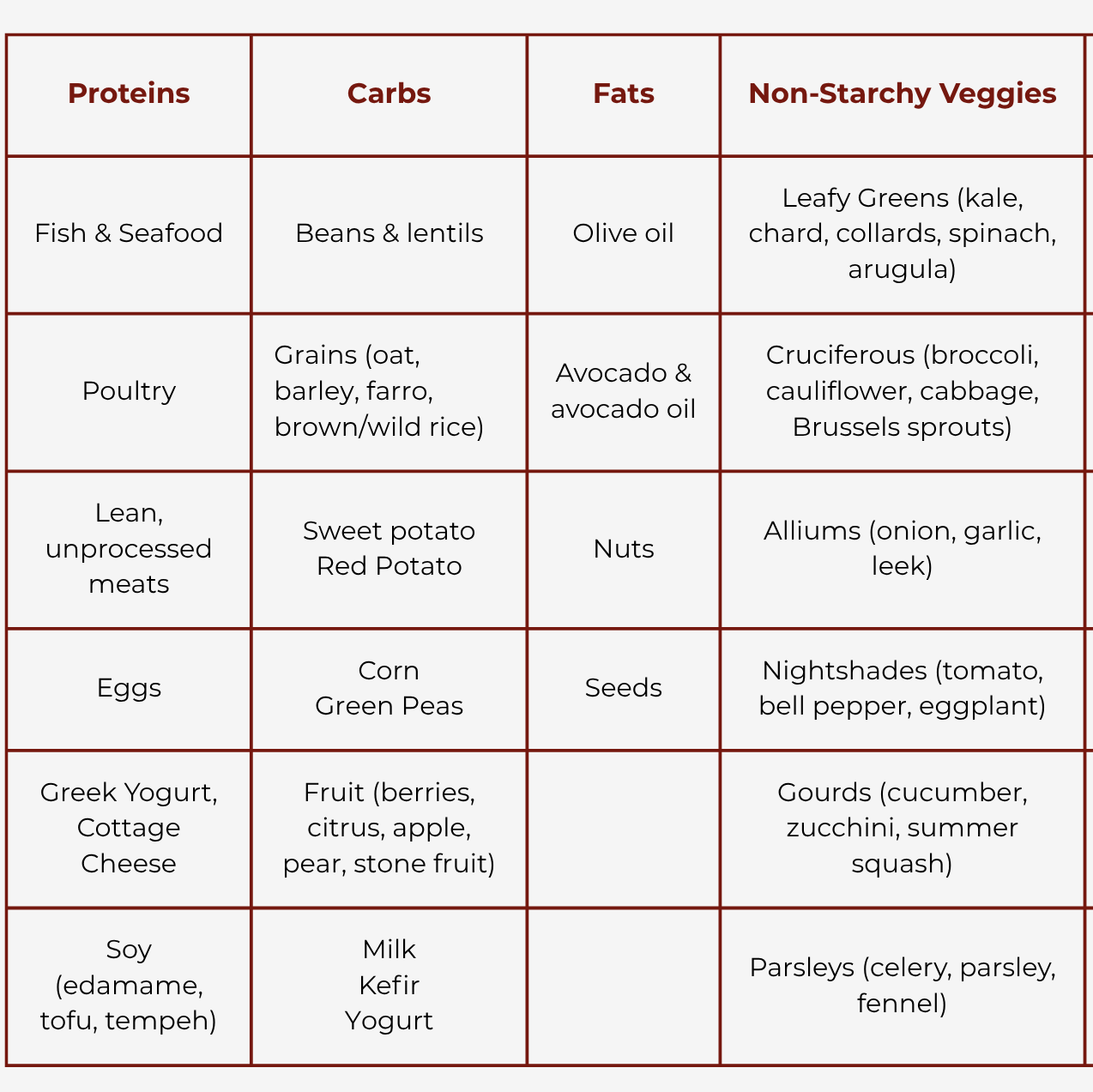
Carbohydrates: Provide the energy you need to power your brain, heart, lungs, muscles, and more. “Single-ingredient” carbohydrates (see chart below) provide a slow, steady drip of energy between meals to help keep you alert and focused.
Fats: Improve absorption of Vitamins A, D, E, and K, provide essential brain structure, and act as a secondary energy source.
Fiber: While not really a macronutrient, the fiber found in veggies, beans, lentils, fruit, avocado, and nuts & seeds supports bowel function, blood sugar and cholesterol levels, and more.
Make it Your Own
If it sounds simple, it is. I’ve just walked you through the framework that I use with most of my patients. Understand what different macros do in your body, and then, depending on your needs and preferences, experiment with how changing the types, amounts, and pairings of different macros.
Use this simple chart to get you started. For most people, including a protein and a carb with each meal and snack is a good place to start, and if you can get a healthy fat and/or a starchy veggie in there too, awesome.
Thanks for being here,
~Allison
Be on the lookout for Part 3 coming up next week. Subscribe below to get it straight in your inbox:
Please remember that this information is meant to inform and inspire and is not personal health or medical advice. Please speak with your healthcare team about what is right for you.
Great information and encouragement as always. Thank you, Allison.
Jackie Nilan