I bet you didn’t know that March is National Nutrition Month. Or that it was Registered Dietitian day on March 11th. Don’t worry if you didn’t send me a gift ;)
It is a challenge for me to distill the world of nutrition into just one post, or even just one month. So, I’ll be putting out a series of posts highlighting what I think are the big take-home messages and hopefully pass on a little awe about the human body while I’m at it.
So what is nutrition anyway? It is one of those terms that is thrown around without really grasping what it is referring to. My favorite definition is:
Nutrition is the science of how the nutrients we consume are digested, absorbed, and used to support metabolism.
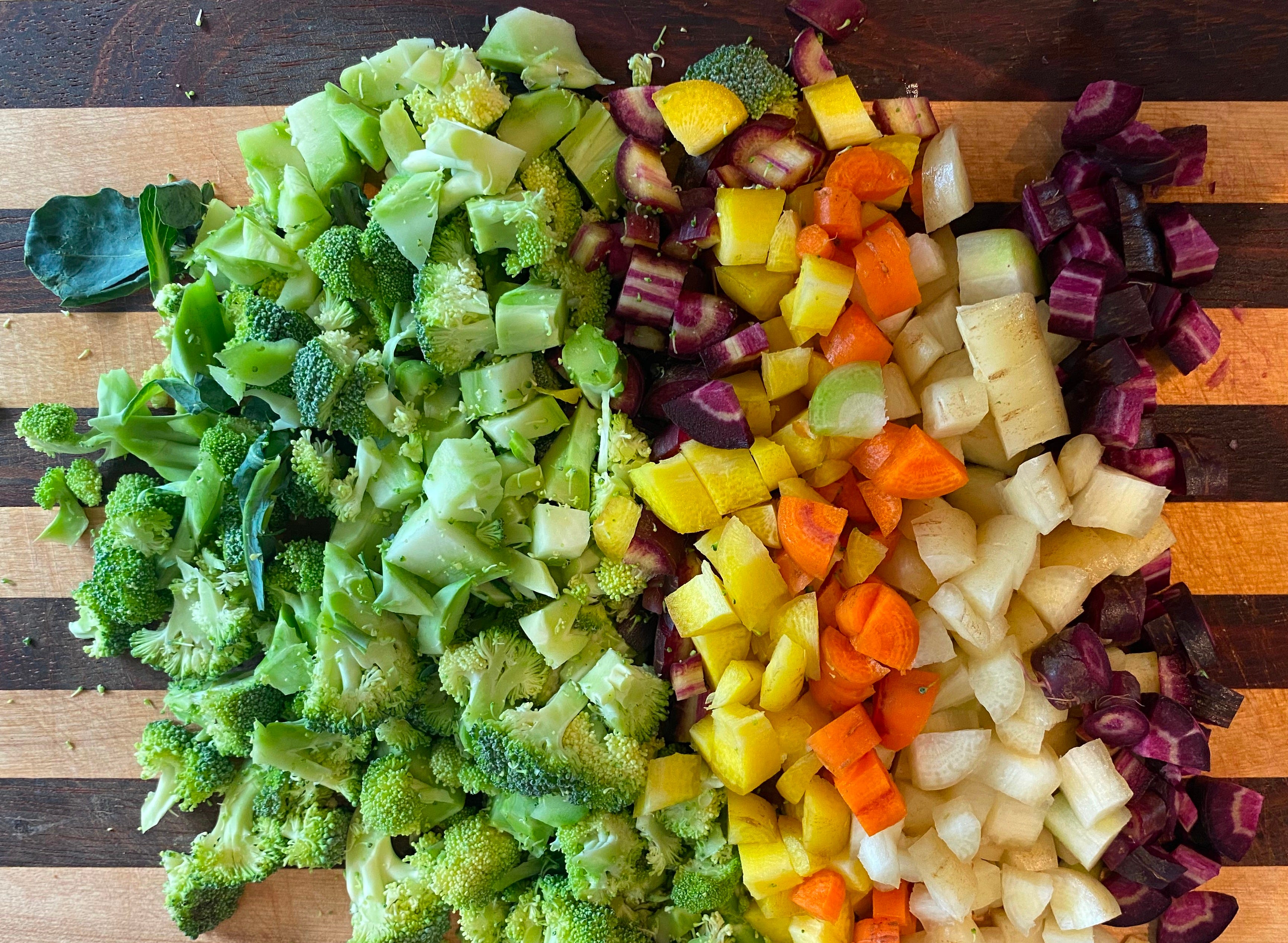
There’s a lot there. Way more than just eating your broccoli, that’s for sure.
Over the next several publications, I’ll do my best to break it down for you in a way that allows you to make better-informed choices about how you use nutrition to work toward your health goals.
Science
Nutrition is a science. Principles that I share are based on well-designed scientific studies. But science changes. When we learn better, we pivot, often leaving a generation of frustrated people in our wake. I get it. But I’d much rather admit when I got it wrong than dig my heels in the sand.
Nutrition is not a diet, a fad, a headline, or a supplement. Nor is it about perfection, restriction, or guilt. There is no one-size-fits-all here.
Nutrients
Much more about nutrients in the following posts. For now, know that nutrients include energy (Calories), macronutrients (protein, carbohydrate, fat), and micronutrients (vitamins, minerals, & phytonutrients). Stay tuned and subscribe to receive future posts, if you aren’t already.
Digestion & Absorption
Cue the awe. Our bodies are amazing. When you take a moment to appreciate everything going on “behind the curtain,” it is remarkable and humbling to admire the orchestra that keeps us alive.
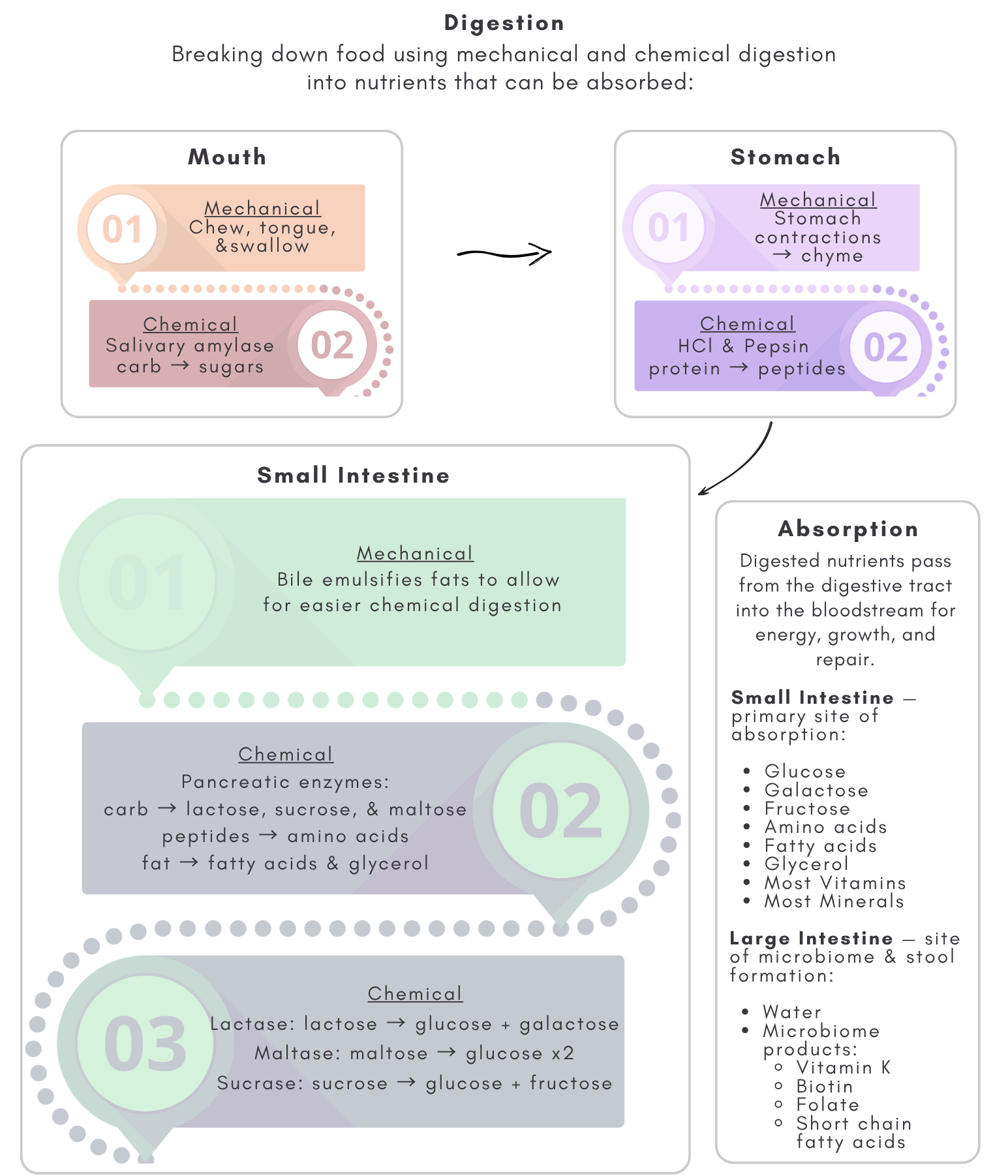
Digestion is the process of breaking down food using mechanical and chemical processes so that it can be absorbed. This occurs in the mouth, continues in the stomach, and really gets to business in the small intestines.
Absorption is the process of nutrients passing from the digestive tract into the bloodstream on their journey to provide energy and building blocks for growth, maintenance, and repair. Most absorption happens in the small intestine, with some further down in the large intestine.*
Metabolism
Metabolism is about so much more than body weight. It is all of the processes and reactions within your body (the “orchestra”) that keep you alive.
Metabolism powers your heart, lungs, brain, muscles, & more. (Fun fact: The brain makes up ~2% of body weight but uses about 20% of energy at rest).
Metabolism builds, maintains, & breaks down muscle, bone, body fat, hormones, enzymes, & immune cells.
Metabolism helps manage blood sugar, facilitate nerve signaling, fluid & electrolyte balance, inflammation, body temperature, and cell, tissue, & organ repair.
Metabolism keeps you alive.
Thanks, body, for being so remarkable.
That’s all for today. Next time, we will dive into the “macros” and how to build a meal that lasts.
Thanks for being here,
~Allison
Please remember that this information is meant to inform and inspire and is not personal health or medical advice. Please speak with your healthcare team about what is right for you.
*I recently gave a class where I went (probably too) deep into my fascination with digestion. Here is the visual I shared. Even if you can’t make sense of it, hopefully you can appreciate the beautiful complexity: