

I have a new website where you can find information about my writing, radio show, upcoming events, and more. You can find it at allisonmckeany.com:
This is the third and final installment in my “Matters of the Heart” series. Part 1 introduced the basics of cardiovascular health, Part 2 explored how to evaluate your risk of cardiovascular disease, and today is an overview of how nutrition contributes to heart disease risk1:
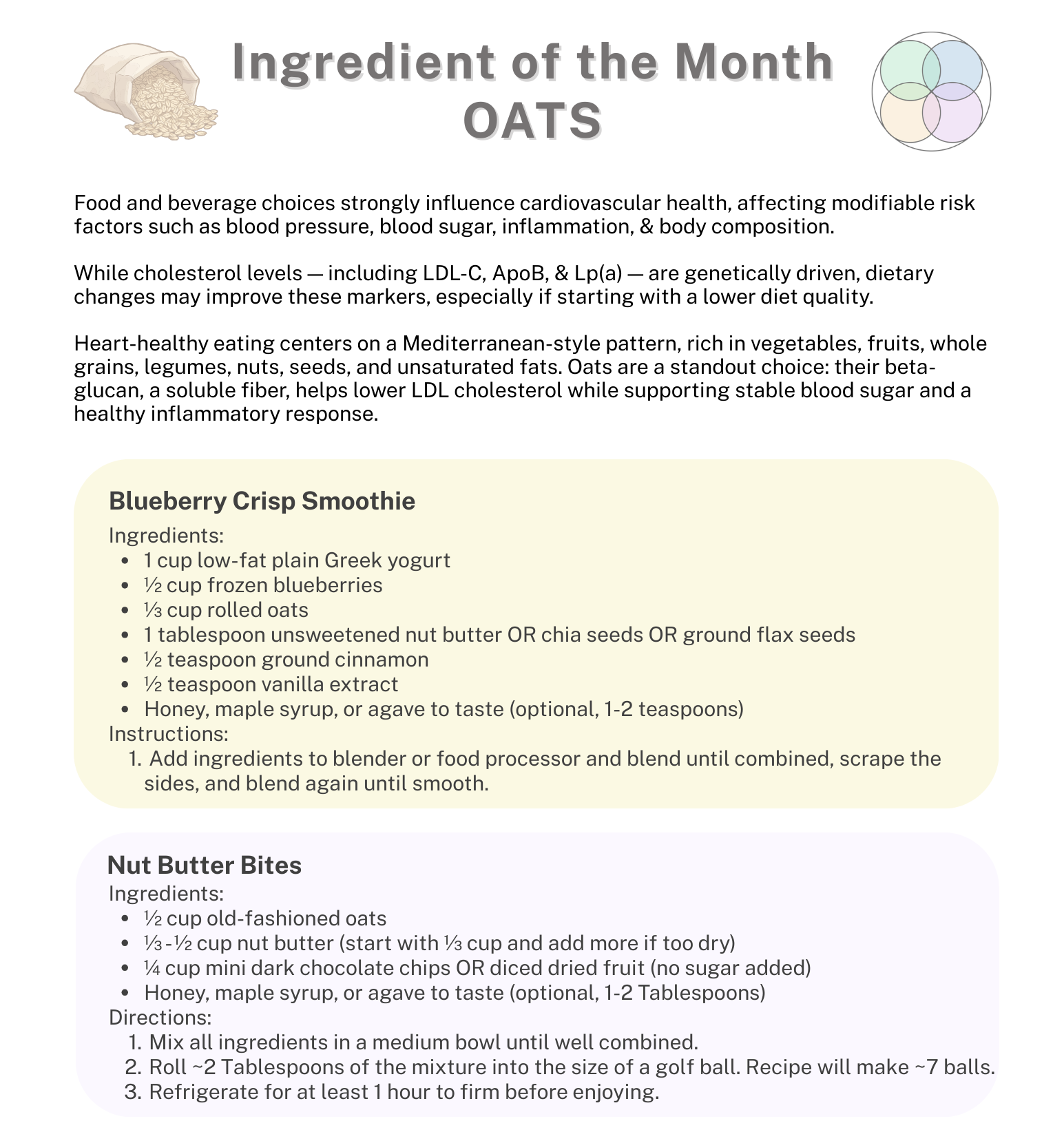
More Oat Recipes to Try:
While I was preparing the above oat-based recipes in a recent class, I fielded some great questions about food, nutrition, & heart health. Here is a sneak peek at what we discussed:
“What can I do to lower my triglycerides?”
Triglycerides are a type of fat affected by much more than dietary fat intake. If you are trying to lower your triglyceride levels, here is a checklist to get you started:
Limit or avoid alcohol.
Limit highly processed carbohydrates, including:
Beverages that contain carbohydrates/sugars — even “natural” beverages such as fruit juices.
Added sugars, including refined sugars as well as “natural” options (see below). You can now find “added sugars” on the nutrition facts label. I typically recommend consuming no more than 25g of added sugar per day.
Limit saturated fats:
Saturated fats are fats primarily found in animal-based products. This includes fatty meats, poultry skin, butter, cheese, cream, etc.
Exception #1: Fat coming from most fish is low in saturated fat.
Exception #2: Fat from tropical oils (coconut, palm) also contains saturated fat, despite being plant-based.
“Is honey better than sugar?”
Not really. Honey, maple syrup, agave, coconut sugar, and similar sweeteners are often marketed as “healthier,” but they raise blood sugar and triglycerides much like refined sugar.
One advantage of honey or maple syrup is that their stronger flavor may allow you to use less, which can help reduce overall sugar intake. However, they should still be used in moderation.
“Is bread a highly processed carb?”
It depends. All grain-based flours are made by grinding the whole grain, which breaks it down and makes the carbohydrate easier for your body to digest and absorb.
If the flour is refined (like white flour), the fiber-rich bran and nutrient-dense germ are removed, leaving mostly the carbohydrate-rich center. This makes refined bread more processed and typically faster to raise blood sugar.
So yes, most breads are processed to some degree. However, that doesn’t mean they can’t fit into a healthy diet. Whether and how they fit in depends on your overall eating pattern, metabolic health, activity level, and personal goals.
“Does gluten-free mean low carb?”
Not necessarily. Gluten is a protein found in wheat, rye, and barley. When products are labeled gluten-free, they typically replace those grains with ingredients like rice flour, tapioca starch, potato starch, or cornstarch.
While these alternatives are gluten-free, they are still carbohydrate-dense and can raise blood sugar, sometimes even more quickly than whole-grain, gluten-containing options. Gluten-free does not automatically mean lower in carbs or healthier overall.
Thanks for being here,
~Allison
This information is meant to educate and inspire, but is not medical advice. Please speak with your healthcare team to determine what is best for you and your health.