

This is the second in a series about bone health. In Part 1, we explored bone throughout the lifespan. Today is a deep dive into bone metabolism and how to support it at any stage of life.
Bone Metabolism: Basics
Bone is alive and in a constant state of being broken down and rebuilt, a process known as remodeling. This complex cycle is fueled by nutrients and orchestrated by two key cells: osteoblasts and osteoclasts.
I know, I wish their names weren’t so similar either. Here’s how I remember them:
OsteoBlasts — B for Builders (build bone)
OsteoClasts — C for demolition Crew (break down bone)
During childhood, adolescence, and young adulthood, osteoblast activity dominates and bone mass increases. Starting around age 30, osteoclasts gradually outpace osteoblasts, and slow bone loss begins. In women, the loss of estrogen during and after the menopause transition accelerates this process by ramping up osteoclast activity.
Bone Metabolism: Necessary Nutrients
If osteoblasts and osteoclasts are the construction and demolition crew, they rely on having access to supplies, delivery drivers, and apprentices. This is where vitamins and minerals come in.
Calcium — the star building block of bone
Vitamin D — required for calcium to be absorbed from your digestive system
Vitamin K — the K2 directs that absorbed calcium to your bones (and not somewhere less helpful, like an artery)
Zinc and Vitamin B12 — support the osteoblast builder cells
Magnesium — supports Vitamin D
While it might be tempting to rush out and buy supplements to cover all of the above, a food-first approach is the ideal way to ensure your body gets the most out of these nutrients. Remember, our bodies weren’t designed to absorb 100% of what we need in a single swallow.

The following is a quick reference guide to the vitamins & minerals involved in bone health, how much most people need, common food sources, and some things to think about when it comes to supplementation. This list is not all-inclusive. Please remember to check with your healthcare team regarding your specific needs:
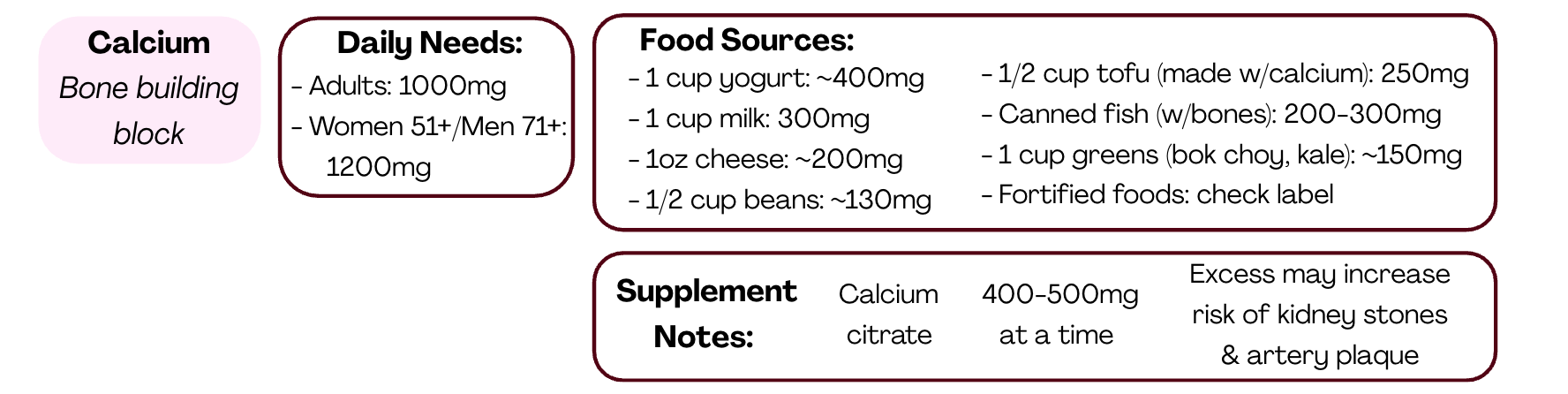
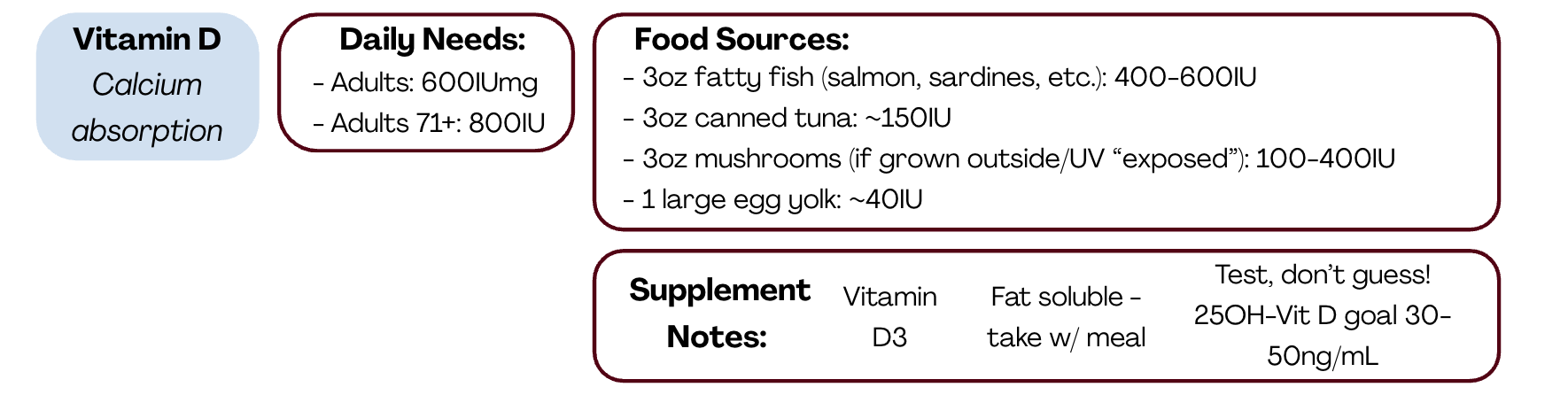
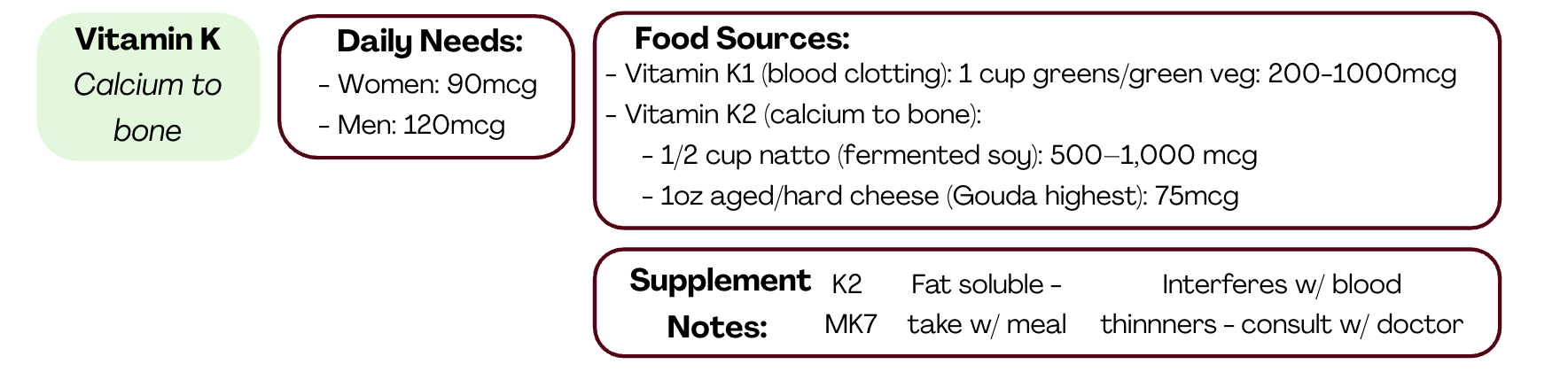
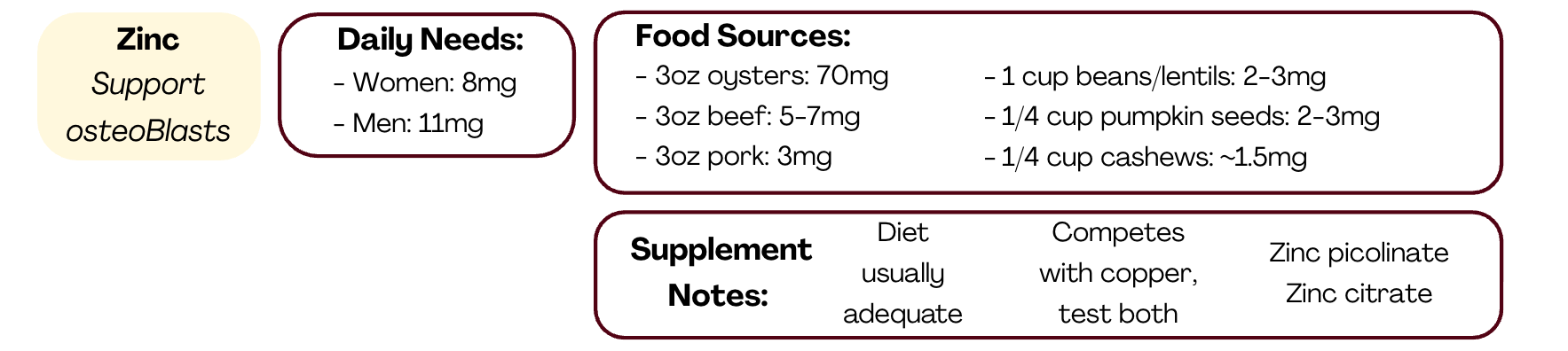
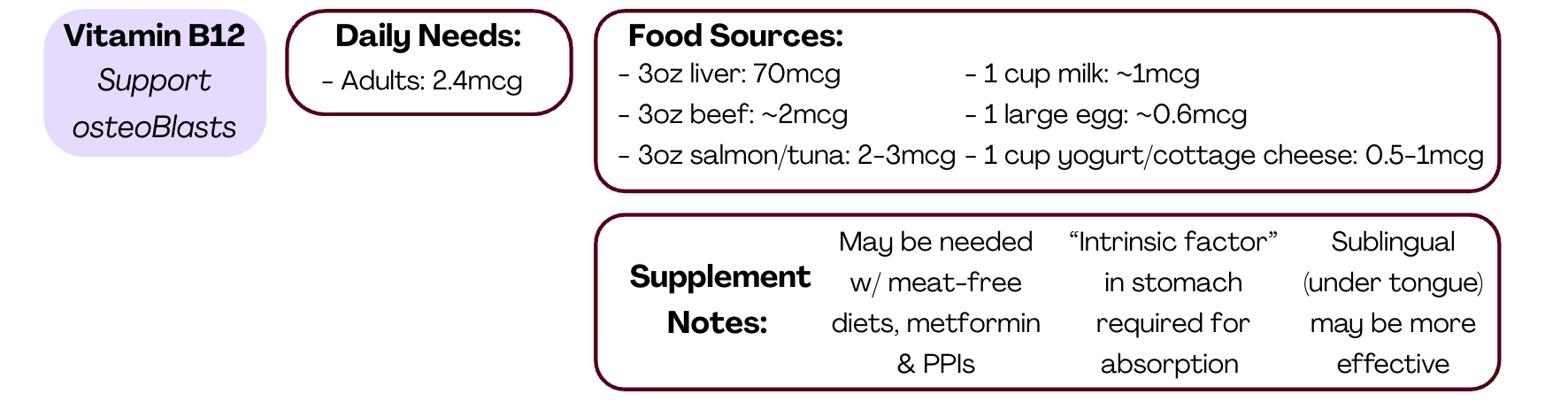
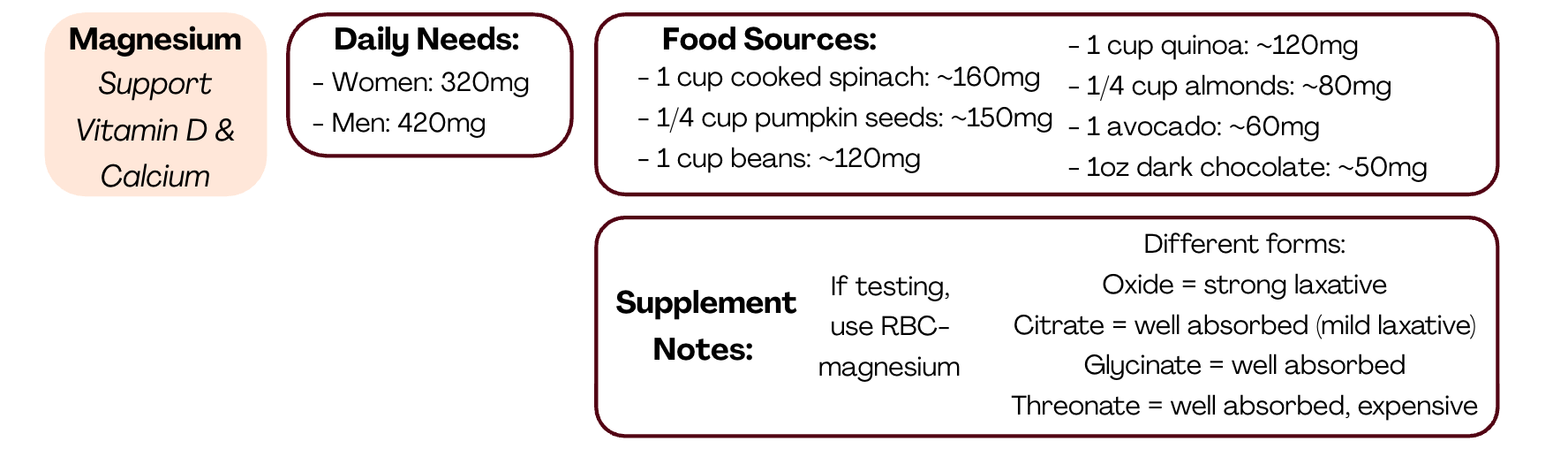
In my experience, the most commonly needed supplements for bone health are Vitamin D3 and K2, as both are difficult to obtain in meaningful amounts through food alone. Many supplements now conveniently combine them in a single pill.
I recommend basing Vitamin D3 dosing on blood test results (the 25-OH vitamin D test). If testing isn’t easily accessible, 1,000–2,000 IU of D3 daily is generally considered safe for most adults, but more is not always better, so testing is worth it.
If this feels like a lot to take in, keep in mind there is another act to this story. Having the right vitamins and minerals available is important, but the body also needs a reason to build and maintain bone. That's where exercise, protein, and adequate energy intake come in — more on that in Part 3. Subscribe below to get it straight into your inbox next week.
Thanks for being here,
~Allison
Remember that this information is meant to educate and inspire, but is not medical advice. Please consult your healthcare team to determine what is most appropriate for you.
Thanks for shedding light on this! I am being more cautious in the supplements take and this was especially reassuring to see I can actually get my needs met by eating real food!