

Bone health isn’t a priority for many of us until later in life.
This is unfortunate because the most critical time for bone health is when many of us think we are invincible: our teenage years.

What exactly is bone?
While it is easy to picture bone as a solid structure, it contains an inner “spongy matrix” that resembles honeycomb, surrounded by a hard outer shell.
Nearly half of bone is made of protein (specifically collagen) in addition to minerals such as calcium and phosphorus.
Unlike hair and nails, bone is alive and constantly being remodeled, meaning it is in a constant state of being broken down and built back up. An estimated 10% of your skeleton is being turned over in this fashion every year!
Bone provides the obvious structure and foundation for movement, but also plays an essential role in mineral storage and blood cell production.
Bone Throughout the Lifespan
The rate of bone remodeling depends on several factors, one of the most important being the stage of life:
Infancy and childhood: Bones are rapidly being built as part of the growth process.
Adolescence: Nearly 40% of total bone mass is accumulated during this window.
Early to late 20s: Peak bone mass is achieved.
Around age 30: Most people begin losing 0.5–1.0% of bone per year.
Menopause transition: For women, bone loss accelerates to 2–3% per year, as estrogen plays a protective role in bone health.
50s and beyond: Gradual bone loss continues, accompanied by an increased risk of fracture.
Why Peak Bone Mass Matters
Given the somewhat inevitable decline in bone mass over time, reaching maximum bone density in your 20s is a critical piece of lifelong bone health:
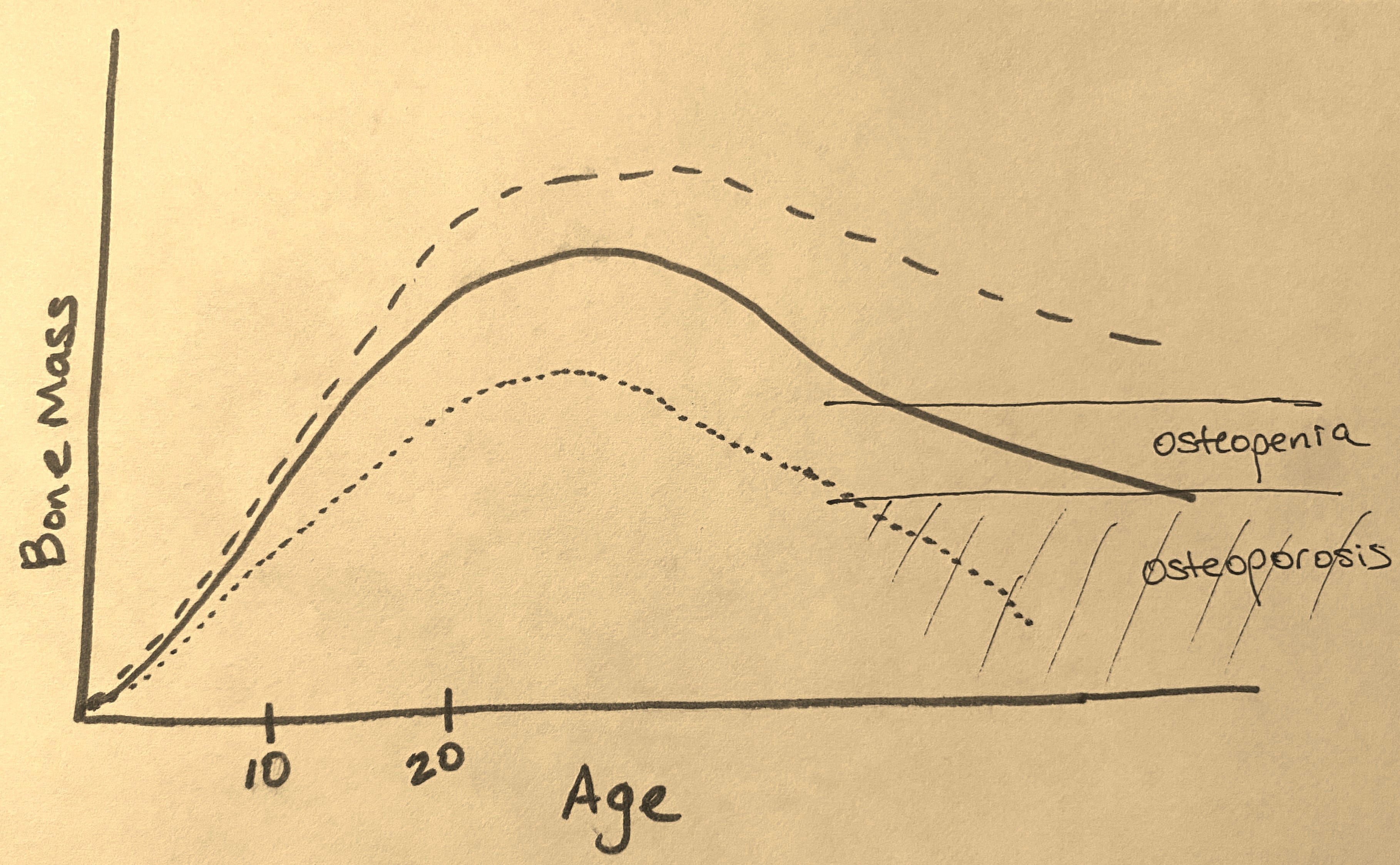
The challenge is that this bone-building window comes at a time when long-term health is rarely top of mind. Some of my most challenging nutrition conversations are with teenage audiences, as I try to find compelling ways to convince them that calcium-rich foods really are important.
It’s Not Too Late
While most of you reading this are likely beyond your peak bone-building years, there is still plenty you can do to slow bone density decline, and that’s exactly what we’ll dig into in my next post.
In Part 2, we’ll explore bone metabolism and the essential nutrients needed to support your bones.
In the meantime, I’d love to hear your questions about bone health so I can make sure to address them throughout this series.
Thanks for being here,
~Allison
Remember that this information is meant to educate and inspire, but is not medical advice. Please consult your healthcare team to determine what is most appropriate for you.